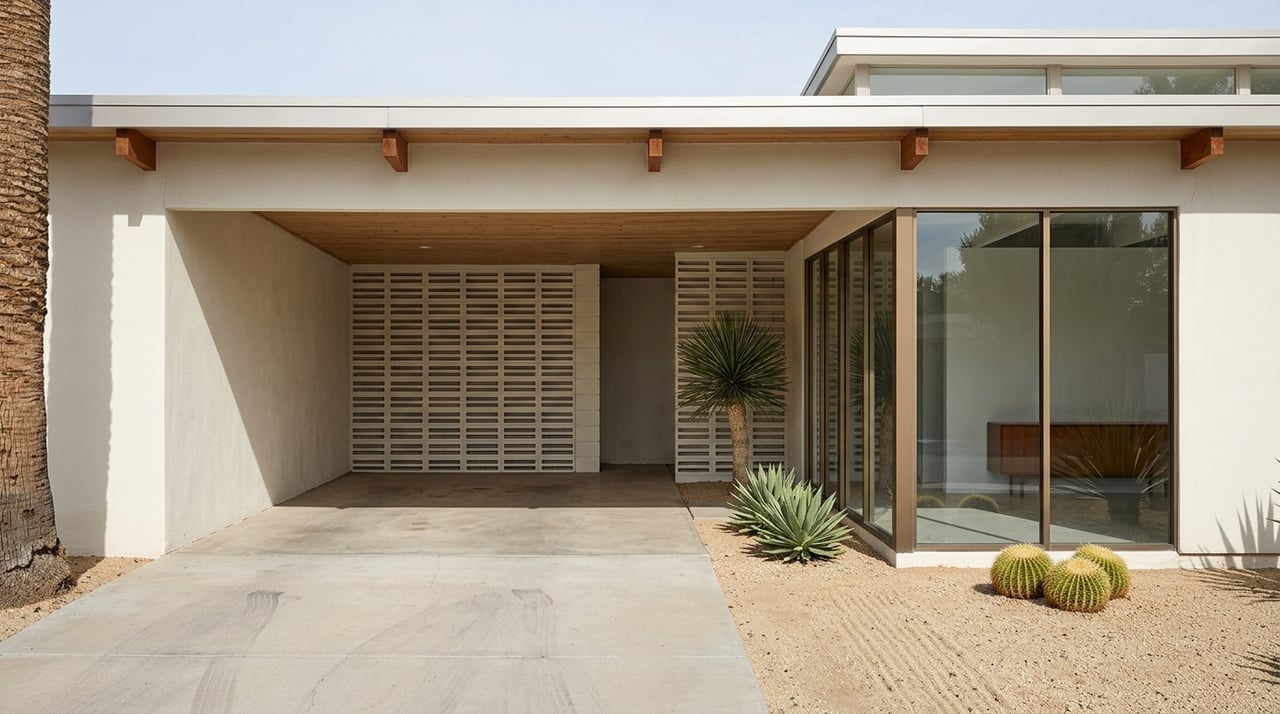
You can feel the difference almost immediately in Indian Canyons. This is not a plug-and-play neighborhood where every house follows the same script. If you are searching for a Palm Springs home with design pedigree, mountain presence, and true indoor-outdoor living, this guide will help you understand what to look for, what to question, and how to judge whether a home’s updates respect its original architecture. Let’s dive in.
Why Indian Canyons Stands Out
Indian Canyons is a south Palm Springs neighborhood in Riverside County that is closely tied to the city’s mid-century story. Local guides describe it as a 1960s-built enclave made up largely of custom mid-century modern homes, including work associated with architects such as Dan Palmer, William Krisel, and Stan Sackley.
You may also hear older references to Canyon Country Club. That history still matters because the neighborhood’s identity is closely connected to a golf-oriented desert-modern setting rather than a standard suburban pattern. Palm-lined streets, custom siting, and a strong architectural point of view are a big part of what buyers respond to here.
What Mid-Century Means Here
In Indian Canyons, “mid-century” is not just a marketing label. Palm Springs historic documentation repeatedly points to specific features that define the style, and those details can help you read listings more carefully.
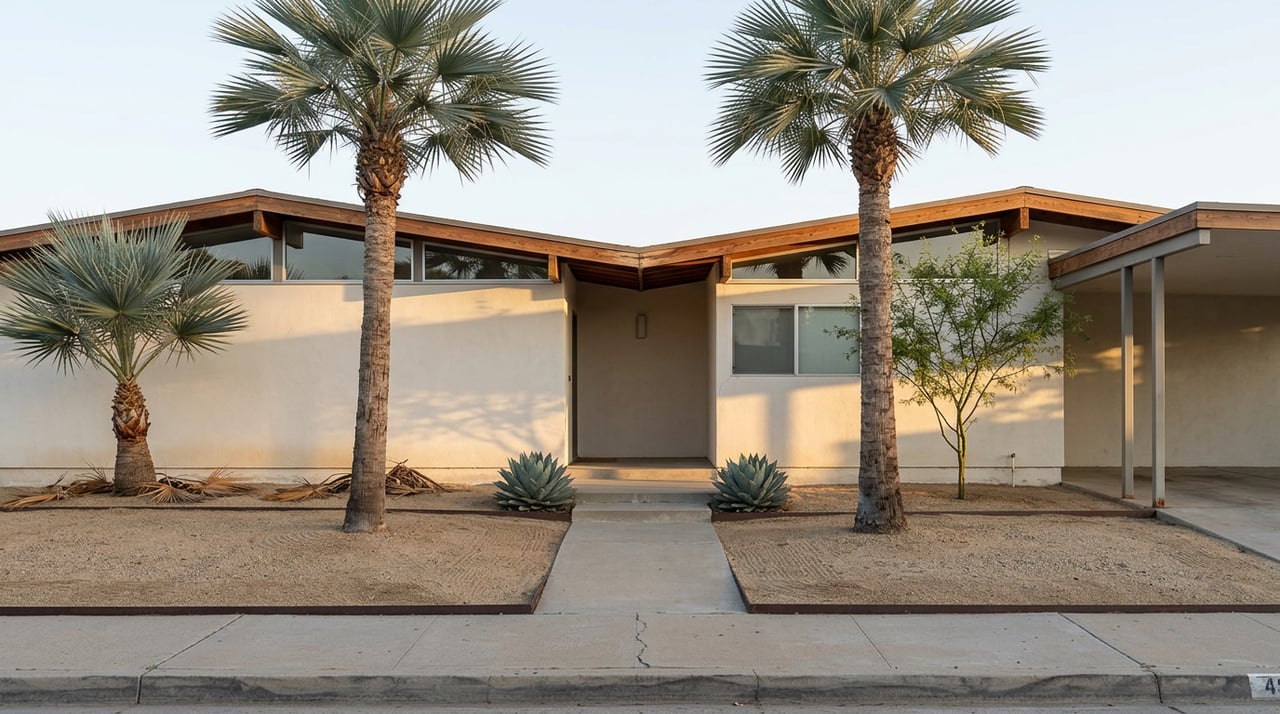
A well-preserved home often shows a low horizontal profile, strong rooflines, and a layout designed to connect the interior with the landscape. The best examples still feel tailored to the desert, with privacy, light, and views working together.
Rooflines and Massing
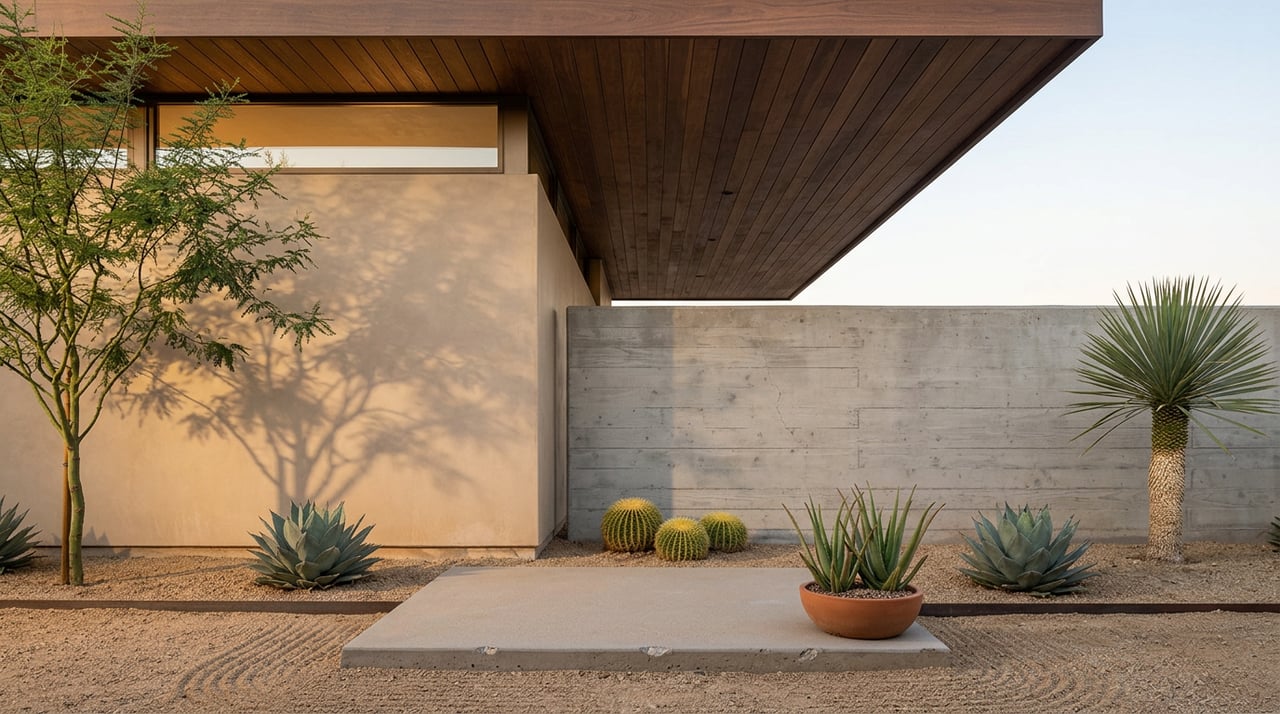
Start with the silhouette. Flat roofs, low-slung forms, butterfly roofs, shed roofs, wide overhanging eaves, and cantilevered canopies are all key features identified in Palm Springs historic records.
These elements do more than create visual appeal. They shape shade, frame the façade, and give the home that calm, linear look buyers often associate with classic Palm Springs modernism.
Glass and Light
Walls of glass are central to the experience. Large fixed panes, sliding glass doors, and clerestory windows are commonly treated as character-defining features in Palm Springs city documentation.
When you tour a home, notice how the glazing works from room to room. A great mid-century house in Indian Canyons should not just be bright. It should also create a smooth connection between indoor living spaces, outdoor patios, pool areas, and mountain or golf course views.
Carports and Breezeways
Open carports and breezeways matter more than many buyers expect. In Palm Springs historic inventory examples, enclosing a carport or converting a breezeway was significant enough to affect how a property was evaluated.
That means you should treat those changes as meaningful architectural alterations, not small cosmetic updates. If a listing says a carport was enclosed, ask when it happened and how it changed the original plan.
Materials and Site Planning
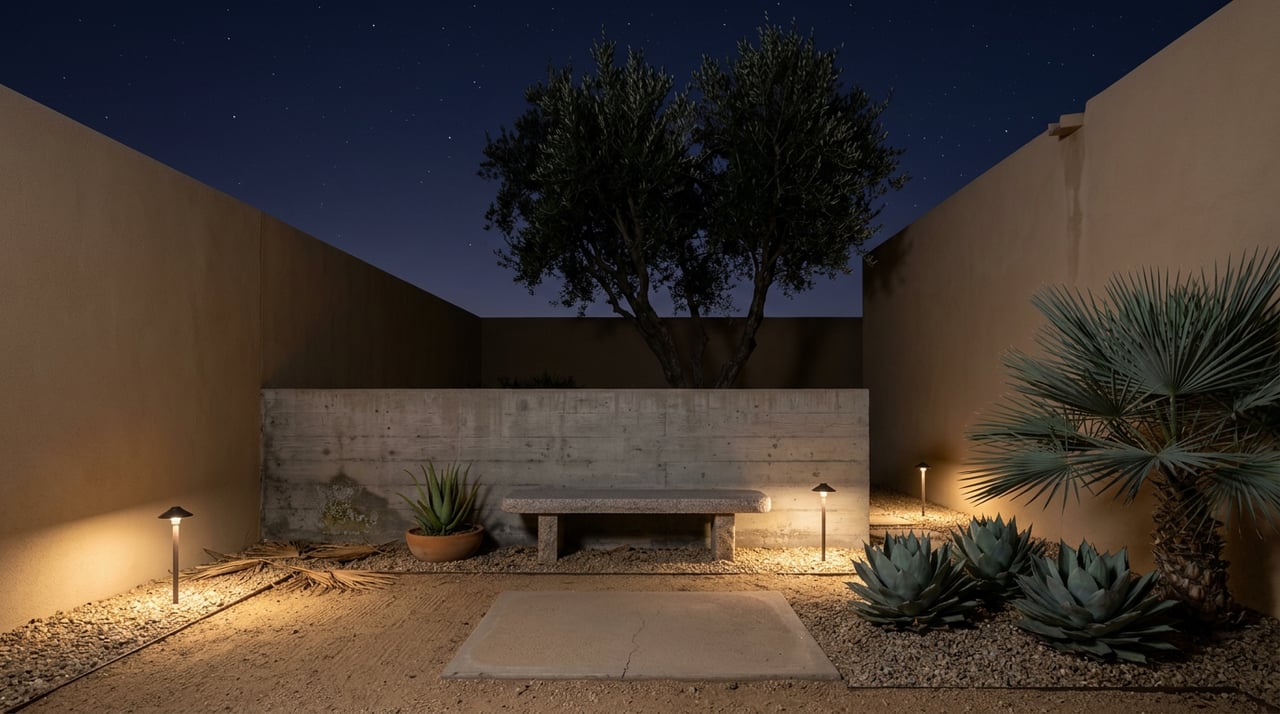
Many Palm Springs modern homes use post-and-beam wood or steel, concrete block, plaster, glass, and screen walls. In Indian Canyons, those materials often work together with landscaped setbacks and orientation to preserve privacy while keeping views open.
This is one reason the neighborhood feels so distinct. The architecture is often designed with the lot, the sun, and the surrounding scenery in mind, rather than simply placed on the parcel.
How to Read Listing Photos Better
Photos can be beautiful and still leave out what matters most. In Indian Canyons, your job is to look past staging and ask whether the home still expresses its original design.
Look for long horizontal lines, clerestory windows, integrated carports, and a clear relationship between the front arrival sequence and the rear outdoor space. If the listing focuses only on finishes and furniture, you may need to dig deeper into the architectural bones.
A remodeled kitchen or new pool deck can be appealing, but the bigger question is whether the updates support the home’s original character. A design-minded buyer should always separate surface upgrades from the features that actually define the architecture.
Why Views Matter Differently Here
In Indian Canyons, a “view home” can mean several different things. Some properties look toward the mountains, some open toward golf-adjacent landscapes, and others create more private courtyard or pool-oriented sightlines.
The important question is not just whether there is a view, but where that view is experienced. Ask yourself which rooms benefit, how the glass frames the outlook, and whether neighboring rooflines or future construction could affect the openness.
Palm Springs planning guidance treats view corridors as a design consideration. That does not guarantee any specific view will remain unchanged, but it does remind buyers that orientation, setbacks, and surrounding structures all play a role.
The Golf-Adjacent Lifestyle Fit
Indian Canyons is closely associated with the Indian Canyons Golf Resort, a historic Palm Springs golf destination with two 18-hole courses on Agua Caliente reservation land. That golf presence helps shape the neighborhood’s feel, even for buyers who are not focused on daily play.
The broader appeal is lifestyle. This area is often described as combining architecture, mountain scenery, and a social Palm Springs setting, with outdoor living playing a major role in how homes are designed and used.
The neighborhood guide also notes its location near a cove protected from the full brunt of desert winds and summer sun. That helps explain why pools, patios, and expansive glazing feel so natural here.
Questions to Ask on Every Tour
If you are serious about buying in Indian Canyons, bring a more detailed checklist than you would in a standard neighborhood. The most interesting homes here are individual properties with their own design history, update history, and preservation questions.
Here are smart questions to ask while touring:
- Which exterior elements are original, and which have been replaced?
- Are the flat roof forms, post-and-beam features, glass walls, or clerestory elements intact?
- Has the carport been enclosed?
- Has a breezeway been converted into interior space?
- What permits, plans, or restoration records are available?
- Were later changes designed as reversible updates or full reconfigurations?
- Is the home designated, potentially eligible, or located in a historic district?
- Is there a Mills Act contract in place, or could the property qualify?
These questions can help you understand whether you are buying a preserved example, a heavily altered home, or something in between.
Historic Status and Buyer Planning
Palm Springs regulates historic properties under Municipal Code Chapter 8.05. Depending on the classification of a property, exterior changes can require city review before permits are issued.
For you as a buyer, that is not automatically a drawback. In many cases, it simply means you should understand the approval path before planning exterior work, restoration, or additions.
The city also states that its Mills Act program is currently accepting applications and is intended to support restoration, rehabilitation, preservation, and maintenance in exchange for potential property tax relief. If you are considering a property with historic significance, this is an important point to explore early.
Who Indian Canyons Best Fits
Indian Canyons tends to be strongest for buyers who care about original desert-modern design, mountain or golf-oriented views, and a neighborhood identity tied to Palm Springs’ mid-century era. If you love architecture and want a home with presence, this area offers a more curated experience than many buyers expect.
It may feel less compelling if your goal is a highly standardized product with minimal variation from house to house. Much of the neighborhood’s appeal comes from custom siting, original details, and the degree to which later updates have respected the architecture.
That is exactly why many design-minded buyers are drawn here. You are not just buying square footage. You are buying a relationship between house, lot, light, and place.
How to Buy With More Confidence
The best Indian Canyons purchases usually happen when you combine taste with due diligence. It helps to understand the language of Palm Springs modernism before you tour, so you can tell the difference between authentic character and a remodel that only looks the part online.
A thoughtful buying process should weigh architecture, alteration history, view orientation, and future usability together. When you do that well, you are far more likely to end up with a home that feels as good in person as it did in the photos.
If you are searching for an Indian Canyons home and want guidance that goes beyond the usual listing tour, Luz Solis can help you evaluate design provenance, lifestyle fit, and the practical details that matter in a Palm Springs mid-century purchase.
FAQs
What defines a mid-century home in Indian Canyons?
- Key features often include flat or low-slung rooflines, wide eaves, walls of glass, sliding doors, clerestory windows, open carports, breezeways, and a strong indoor-outdoor connection.
What should buyers ask about changes to an Indian Canyons home?
- Ask which exterior features are original, whether the carport or breezeway was altered, what permits and plans are available, and whether prior work respected the home’s architectural character.
Why do carports and breezeways matter in Palm Springs mid-century homes?
- Palm Springs historic records treat those elements as meaningful parts of the original design, and enclosing or converting them can materially change the home’s character.
Are views in Indian Canyons always protected?
- No. View corridors are a design consideration in Palm Springs planning, but the openness of a view can still be influenced by setbacks, neighboring roof heights, and future construction.
What is the buyer appeal of Indian Canyons in Palm Springs?
- Indian Canyons appeals most to buyers who want custom mid-century architecture, golf-adjacent surroundings, mountain scenery, and a neighborhood identity strongly tied to Palm Springs modernism.
What should buyers know about historic status in Indian Canyons?
- Some properties may be designated, potentially eligible, or affected by local historic review, so buyers should confirm status and understand whether exterior changes may need city review.