If you live on the south end of Palm Springs, you already know the back of the neighborhood as a gate, not a destination. Nine months a year it opens at seven. For three months it does not, or at least not on the days most residents would use it.
October 1 puts the daily rhythm back.
The date that actually matters
The Agua Caliente Band of Cahuilla Indians runs the canyons on two schedules. From October 1 through July 4, the trails are open daily. From July 5 through September 30, access is Fridays, Saturdays, and Sundays only. That single line in the operating calendar is the reason a Tuesday morning in late September feels different from a Tuesday morning in early October for anyone whose driveway faces the reservation.
The reservation is not small. The land spans over 31,500 acres, and the daily-hours window is the one where a resident can treat any of it as routine.
A quick orientation, because the three canyons are not interchangeable:
| Trailhead | Loop distance | What residents actually use it for | Fall caveat |
|---|---|---|---|
| Andreas Canyon | ~1 mile | Pre-work walk, dogs (where permitted), first coffee | First lot to fill on weekends |
| Murray Canyon | ~4 miles round trip | Longer weekend hike, wildlife | Seven Sisters is often dry in early fall |
| Palm Canyon (Trading Post) | Variable | Victor Trail loop, waterfall access | Trading Post lot is the fallback when Andreas fills |
The eight o'clock problem
The operational quirk that matters more than the calendar is parking. The Trading Post and Palm Canyon trailhead sit roughly 1.5 miles further in from the first lot, and on winter and spring weekend mornings, that first lot fills early, often before 10 a.m. If you're aiming for Andreas or Murray, arrive at the opening; if the lot's full, you may be waiting at the gate even with tickets in hand.
That is a weekend problem for visitors. It is a solved problem for residents, because October reopens the weekdays. A Wednesday at 8:30 is empty. A Saturday at 9:15 is not. The neighborhood's real amenity, in other words, is not the trails themselves. It is the ability to hit them on the days everyone else cannot.
The tribe also closes the canyons for roughly a week each year for a private observance. In 2026, that closure ran from Sunday, May 24, through Sunday, May 31. Tahquitz Canyon stays open on its own schedule during that window, which is worth knowing before you plan a spring visitor's itinerary around a single gate.
Which loop deserves the early alarm
Fall is short. Between the October 1 reopening and the December weekends when the canyons genuinely fill, there is a stretch of maybe eight weeks when a resident can pick a trail based on preference rather than crowd math. A few worth prioritizing before the winter arrivals reset the parking equation:
- The Victor Trail loop out of Palm Canyon. Best accessed by hiking a mile south on the Palm Canyon Trail, the Victor Trail takes the hiker out of the shade of the palm trees, up onto the ridge that overlooks the canyon, and returns to the Trading Post as a three-mile loop. It is the shade-to-sun contrast that carries the neighborhood's reputation, and the mid-October morning light is the reason to time it now.
- Murray Canyon to Seven Sisters, back through Coffman. Murray Canyon Trail is well known for ending at the Seven Sisters Waterfall. On the way back, take a right at the Coffman Trail junction; Coffman loops through the desert floor and connects back to Murray Canyon, which returns you north to the Andreas Canyon parking area. Murray also happens to be the quieter of the three, and several reviewers have noted bighorn sheep sightings on it.
- West Fork Falls out of the Trading Post. This is the fifteen-minute option for a resident who wants a canyon walk before an errand run. West Fork Falls is one of the most accessible waterfalls in the Indian Canyons, lying only 340 feet from the Trading Post parking lot, best viewed from December to March, flowing from an opening between two massive boulders wedged tightly together.
The order matters. Water is not guaranteed in October. Rock and light are.
What October actually changes about the water
Fall opens the trails. It does not open the creeks. Seven Sisters is one of the neighborhood's most-photographed features, and Murray Canyon Creek is seasonal, with water running through the canyon during the winter and spring months only. Early fall visitors who arrive expecting the waterfall image they saw on someone's April camera roll will find a dry rock face and a good hike.
West Fork Falls follows the same rule. The December to March window is when the two boulders actually deliver water into their small pool. Before that, the geology is the show.
The interpretive point for a resident planning fall guests: October is the trail month, December through March is the waterfall month, and the two do not overlap cleanly. A Thanksgiving hike is dry. A February hike is loud.
The neighborhood as staging ground
There is a reason Palm Springs residents further north drive twenty minutes to park at a lot that will be full by mid-morning. The people who live in Indian Canyons do not have to. The tradeoff for residing at the edge of a working tribal reservation is a set of quiet operating rules, chief among them the summer schedule and the annual private closure. The tradeoff in return is a fall through spring stretch where the trailhead functions the way a park would in another city, except with 31,500 acres behind the gate instead of a few hundred.
The pricing at the Toll Gate is not the story here, but for residents who host guests: admission runs $12 for adults, $7 for seniors 62+, $7 for students with ID, $6 for children 6–12, and is free with U.S. military ID. It is a working reservation, not a subsidized city park, and the fee schedule reflects that.
Ancient rock mortars adorning the entrance to the canyon remind visitors of the presence of the first people, and the tribe has kept the land in its family for a reason that predates any subdivision map. Living next to that is a specific kind of privilege, and October 1 is the day it starts paying dividends again.
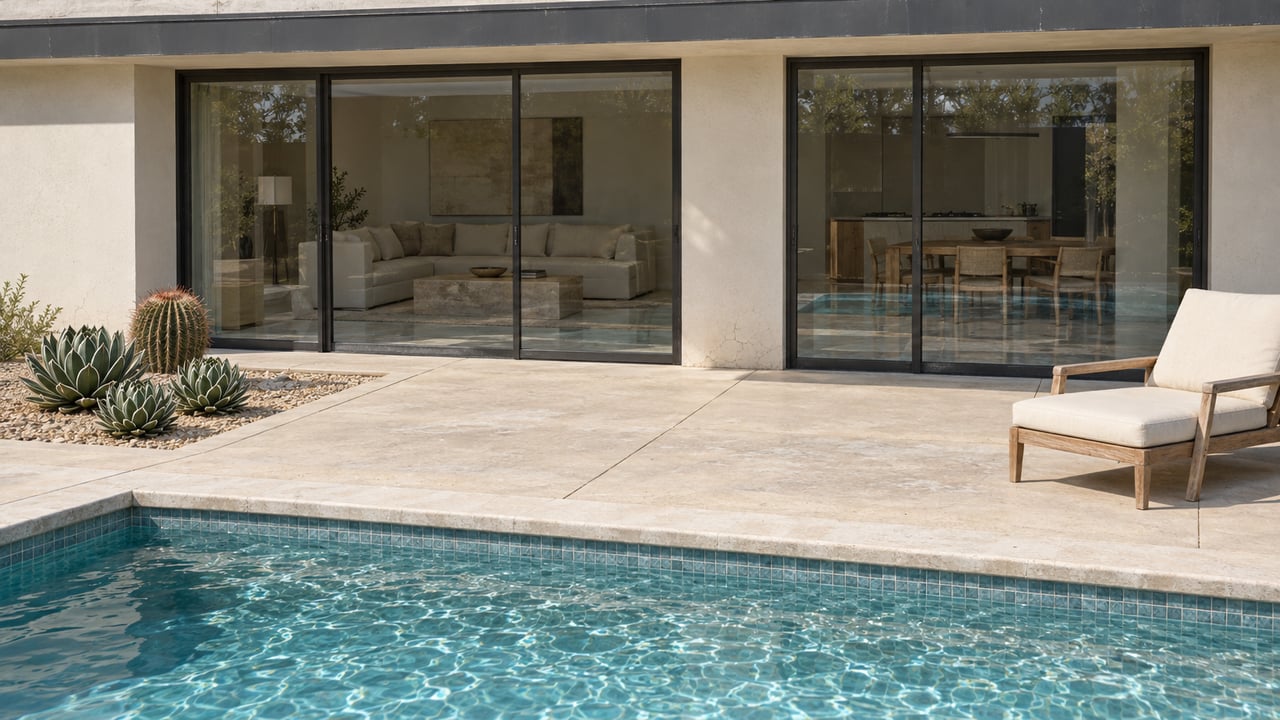
The homes on this side of Palm Springs were designed for a life that faces the mountain, not the street. The kitchens open west. The pools point south. The morning walk goes through a gate that answers to a tribal calendar, not a municipal one. When someone eventually asks what it is really like to live here, the honest answer is that on October 1 you set the coffee timer thirty minutes earlier and you do not touch it again until July.
If you are thinking about a home in Indian Canyons, or already own one and are curious what fall traffic patterns mean for a spring sale, Richie Usher Realty Group knows this end of Palm Springs at street level and gate level both. Find Your Palm Springs Modern Home.